Brake Fluid Service — Every Two Years, No Exceptions
Mercedes-Benz specifies brake fluid replacement every two years regardless of mileage. This interval is shorter than most manufacturers recommend, and it's shorter for a good reason. Mercedes vehicles with ABS, ESP stability control, and adaptive brake assist route brake fluid through numerous small solenoid valves in the ABS/ESP hydraulic unit. These valves have tighter tolerances than conventional wheel cylinders, and they're more sensitive to moisture-contaminated fluid. Glycol-based brake fluid absorbs moisture from the atmosphere continuously — the sealed system isn't perfectly hermetic over time. As moisture content rises, the boiling point of the fluid drops.
Brake Fluid Specification
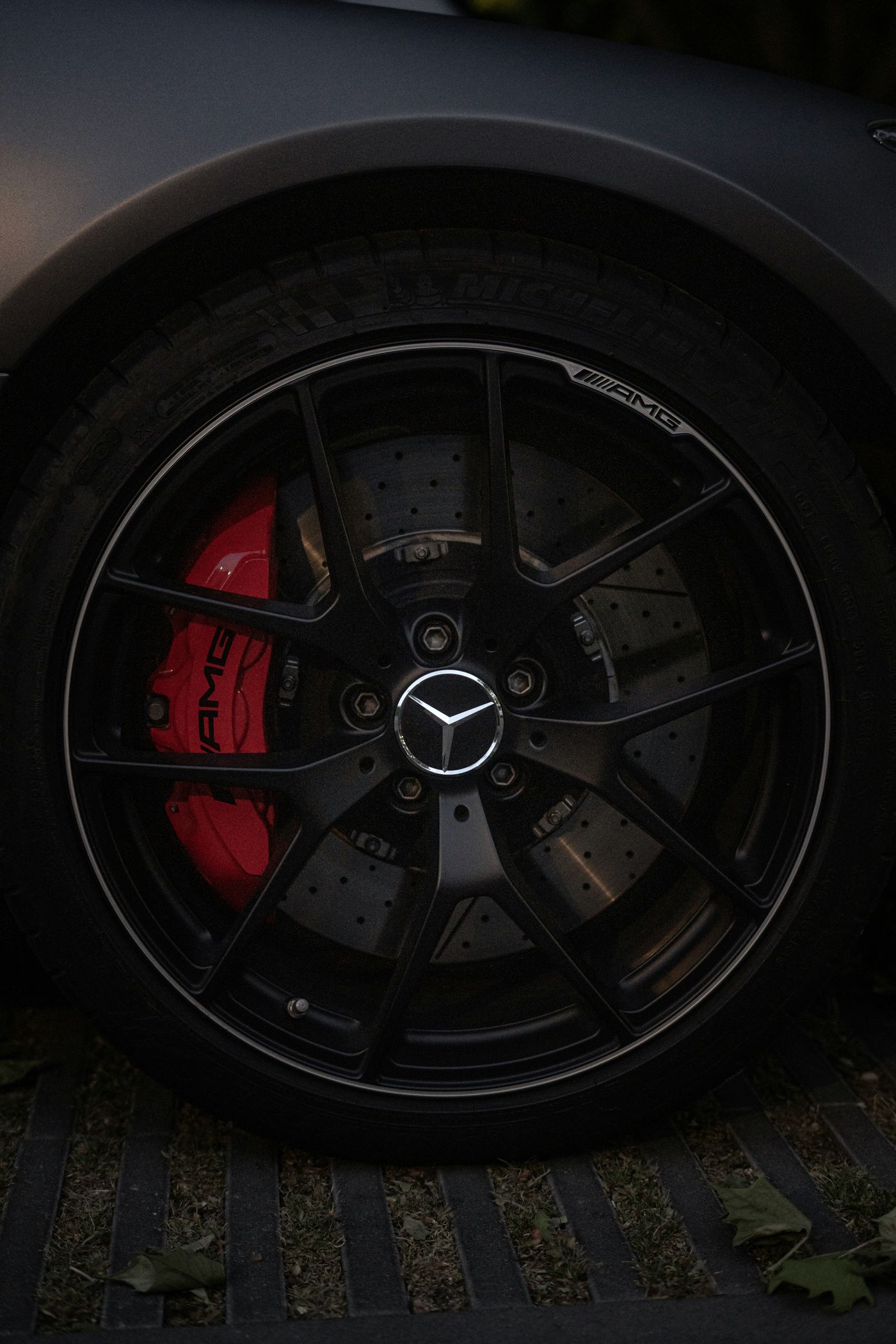
OEM-equivalent brake components — AMG and standard fitments stocked.
Mercedes specifies DOT 4 brake fluid that meets their internal specification. Most quality DOT 4 fluids from major brands (Pentosin, ATE, Motul) meet the requirement. The critical factor is using a genuine DOT 4 — not a DOT 3/4 blend or a DOT 3. Confirm the specification before authorizing any brake fluid service.
Brake Wear Indicators
Mercedes vehicles have electronic brake wear sensors embedded in the inner brake pad on each axle. When pad material wears to the minimum thickness threshold, the sensor contacts the rotor face and completes a circuit that triggers the brake wear warning in the instrument cluster. This warning typically appears first as a yellow advisory and escalates to a red warning as wear continues. The sensor is a one-time-use component — it's replaced with every brake service on the axle where it triggered.
One nuance: the wear indicator triggers when pads reach minimum legal thickness — not ideal replacement thickness. Waiting until the indicator illuminates means the pads have been running at minimum spec, increasing rotor wear. A proactive brake inspection at each service interval lets you choose when to service on your schedule rather than the brake wear warning's schedule.
Pad and Rotor Service by Model
Ranges reflect OEM-equivalent parts at independent shop labor rates. Dealer pricing runs 30–60% higher. Prices include new wear sensors where applicable.
Rotor Replacement vs. Resurfacing
Mercedes composite rotors (standard on most modern applications) are not designed to be resurfaced. The composite design with a cast iron rotor face bonded to an aluminum hat creates thermal management properties that depend on material thickness. Resurfacing removes material and changes those properties. Mercedes rotor replacement is the correct service — not resurfacing. For AMG models with two-piece floating rotors, only the rotor ring is replaced, not the hat assembly.
Electronic Parking Brake Service
Most post-2010 Mercedes models use an electronic parking brake (EPB) actuator integrated into the rear brake caliper. Rear brake service on EPB-equipped vehicles requires a XENTRY or compatible scan tool to retract the EPB actuator motor electronically before compressing the rear caliper pistons. Attempting to compress an EPB caliper piston without the retract function will damage the actuator. Any shop servicing rear brakes on your Mercedes must confirm they have the correct EPB service capability before starting.